











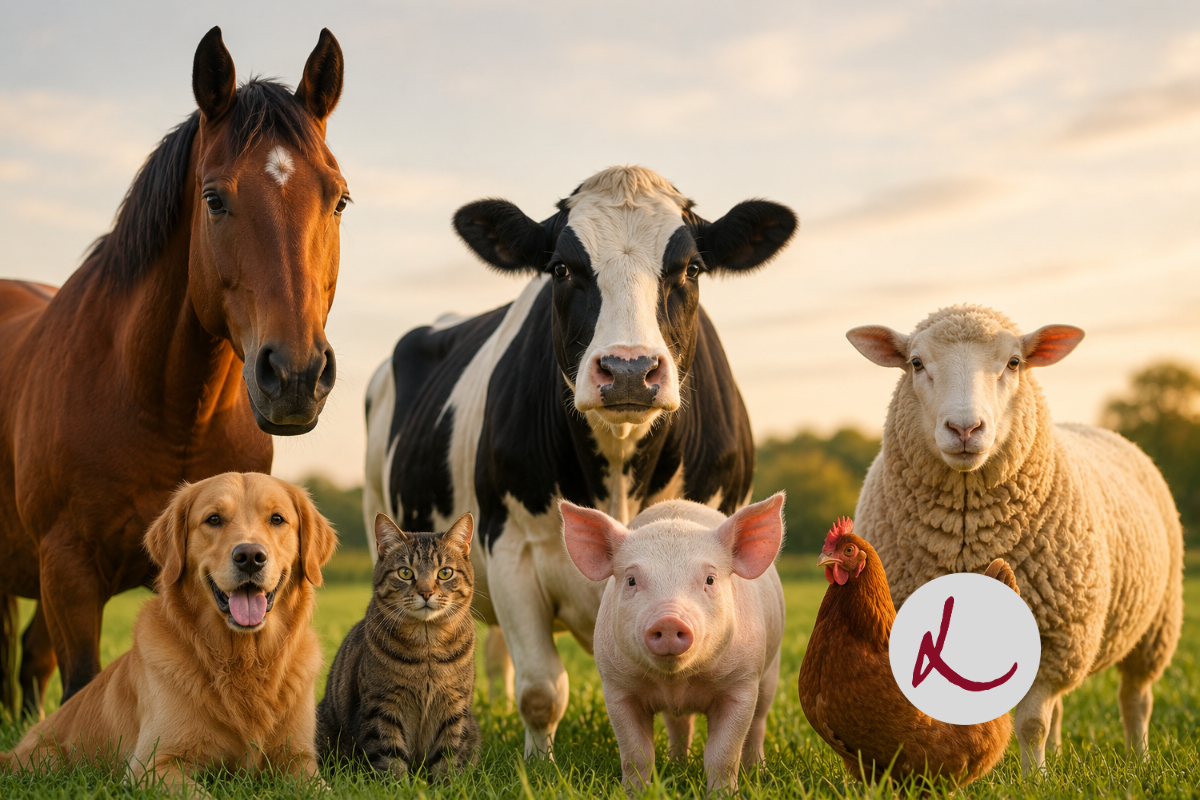
The Lines Between Nutrition, Health and Technology Are Disappearing
For decades, animal health and animal nutrition developed as largely distinct industries. Animal health centered on pharmaceuticals, vaccines, diagnostics and veterinary care, while nutrition focused on feed, pet food, ingredients and supplements. That distinction is rapidly fading.
Across companion animals and livestock, nutrition is increasingly being used to influence health and performance, while advances in diagnostics, microbiome science, biotechnology, data and precision technologies are changing how animal health is monitored and managed.
The result is an increasingly interconnected ecosystem spanning animal health, nutrition, functional ingredients, supplements, diagnostics, biotechnology, microbiome science and precision technologies. This convergence is changing where companies invest, how they compete and, ultimately, where M&A capital will flow.
Nutrition Is Becoming Part of the Health Equation
Perhaps the most significant shift is the evolving role of nutrition. Historically focused on calories, growth and feed efficiency, nutrition is increasingly expected to deliver measurable health and performance benefits.
In companion animals, consumers are seeking products addressing digestive health, mobility, immunity, weight management and longevity. In livestock, nutrition increasingly intersects with animal health, disease prevention, feed efficiency, sustainability and production economics.
These trends are driving investment across functional ingredients, probiotics and prebiotics, specialty proteins and fats, nutraceuticals, precision nutrition and microbiome technologies. Nutrition is increasingly moving from something an animal consumes to something that actively influences health and performance.
Technology Is Accelerating the Convergence
Advances in biotechnology, diagnostics and data are making both health and nutrition increasingly precise. Precision fermentation, AI-enabled formulation, continuous monitoring, rapid diagnostics, biosecurity analytics and data-driven nutrition are expanding the capabilities available across the ecosystem.
Traditional industry boundaries are becoming less meaningful as a result. Feed additive companies are incorporating microbiome science. Pet food companies are expanding into supplements and preventative health. Animal health companies are investing in monitoring and nutritional interventions. Diagnostics platforms are generating data that can inform both treatment and nutrition.
These intersections are creating new strategic possibilities and expanding the universe of potential partners and acquirers.
Different Markets, Similar Direction of Travel
In companion animals, pet humanization continues to reshape consumer behavior. Owners increasingly approach pet wellness similarly to their own health, prioritizing better ingredients, preventative care, supplements, personalized nutrition and products supporting longer, healthier lives.
Livestock markets are evolving in parallel, albeit for different reasons. Producers remain focused on feed efficiency, animal health, mortality, productivity, sustainability, traceability and overall production economics.
Increasingly, the solutions to these challenges cross traditional categories: nutrition influences health, diagnostics improve nutritional decisions, monitoring enables earlier intervention, and biotechnology creates new classes of functional ingredients.
Across both markets, some of the most compelling opportunities are emerging at the intersection of nutrition, health and technology.
Why This Matters for M&A
Historically, acquisition strategies were relatively linear: pet food companies acquired pet food companies, feed companies acquired feed companies and animal health companies acquired animal health companies. That is changing.
Companies are increasingly using M&A to acquire capabilities that would take too long or be too difficult to develop organically, including proprietary formulations, functional ingredients, technical expertise, manufacturing capacity, regulatory capabilities, diagnostics, data, distribution and access to new species, geographies and end markets.
As categories converge, a company that historically had one logical buyer universe may now have several.
A differentiated functional ingredient business, for example, could be relevant to a global animal nutrition company seeking innovation, an animal health company expanding into preventative wellness, a pet food company building a supplements platform, a human nutrition company seeking adjacent applications, or a private equity investor pursuing a broader health and wellness platform.
Similarly, technologies developed for one species or application may increasingly have value across multiple end markets.
That strategic overlap matters. A broader universe of credible acquirers can create greater competitive tension—and competitive tension can drive premium M&A outcomes.
Scale and Differentiated Capabilities Will Command a Premium
Innovation is accelerating, but many of the markets supporting that innovation remain highly fragmented. Numerous founder- and family-owned businesses possess differentiated products, technologies or technical expertise but lack the global distribution, regulatory infrastructure, manufacturing capacity or capital required to maximize their potential.
That creates a natural environment for consolidation. Strategic acquirers can add innovation and specialized capabilities, while private equity can combine fragmented businesses into scaled platforms with greater commercial and financial resources.
However, not every participant will benefit equally.
Livingstone expects premium valuations to increasingly accrue to companies possessing a combination of proprietary technology or intellectual property, differentiated formulations, demonstrable health or performance benefits, regulatory expertise, technical sales capabilities, scalable manufacturing and exposure to multiple strategic buyer categories.
Increasingly, the defining question will be simple: What does this company uniquely own or do that a strategic acquirer needs?
Building the Next Generation of Animal Health Platforms
Some of the most interesting businesses in animal health and nutrition may ultimately be those that do not fit neatly within traditional industry definitions. The strongest platforms will increasingly combine capabilities across nutrition, health, biotechnology and technology.
For business owners and investors, that raises an important strategic question:
What does this company need to become over the next three to five years to be strategically important to the industry’s most logical acquirers?
The answer can influence investments in R&D, manufacturing, talent, geographic expansion and M&A. It can also shift the role of M&A itself—from simply an eventual exit to a proactive tool for acquiring the capabilities that make a business more strategically valuable.
Looking Ahead
Animal health and nutrition remain highly attractive areas of long-term investment, supported by pet humanization, preventative health, increasing global protein demand and continued advances in nutritional science, biotechnology and precision technologies.
But the next chapter of value creation will look different from the last.
The opportunity is increasingly at the intersection of animal health, nutrition and technology. Companies that recognize this convergence and strategically build the capabilities required to compete within it will be best positioned to create long-term value.
For owners, the objective should be to build a business that becomes strategically important to the companies shaping the industry’s future—and, ultimately, one that buyers compete to acquire.
About Livingstone
Livingstone is a global mid-market M&A and debt advisory firm with more than 140 professionals across North America, Europe and Asia. The firm advises clients on sell-side and buy-side M&A, debt advisory, special situations and other corporate finance solutions across its core sectors, including Business & Technology, Consumer, Energy & Infrastructure, Healthcare, and Industrial.
Livingstone’s Food & Agriculture practice has completed more than 75 transactions across the agribusiness value chain. The team has extensive experience across the animal health and nutrition ecosystem, including animal health products, vaccines and therapeutics, diagnostics, animal nutrition, feed and feed additives, specialty and functional ingredients, pet food and treats, supplements, animal wellness, and technologies serving both companion animals and livestock.
Livingstone works with privately held and family-owned businesses, financial sponsors and strategic acquirers to help clients evaluate growth opportunities, acquisitions, capital alternatives and strategic transactions across the global animal health and nutrition landscape.